
How 48 hours and social media landed MMC Land Management in an international spotlight

John Pisone confronted the anti-fracking protesters in Mars, Pennsylvania on December 27th, 2015.

But he was not diplomatic; Mr. Pisone began hurling racially-charged expletives at Tom Jefferson. This led to a forgettable end to 2015 for Mr. Pisone because Mr. Jefferson is a free-lance videographer—and he recorded it.

Mr. Jefferson uploaded the video to his YouTube account that day, titled, “One Of The Many Face[s] of Racism in America”.

The online reaction was understandably swift. The video has been shared approximately 1.2 million times on Facebook. Numbers for Twitter are not available with their restricted search function. It’s a safe bet that it spread as widely.

Butler News’ Facebook page posted an article with the video on the morning of December 29th, asking readers to identify Mr. Pisone. It took two hours.

A few hours later, MMC Land Management, Mr. Pisone’s then employer, terminated his employment with this statement on their Facebook page:

“Today, we were disgusted to learn that one of MMC’s former employees used racial slurs and made racially charged comments during a peaceful protest in Mars, Pennsylvania, outside of work hours at a location with which we have no affiliation. We are sorry that this incident occurred. Whether at work or not, we do not condone hate speech—EVER. Inclusion and diversity are among MMC’s core values. We believe in equality for everyone, regardless of race, age, gender identity, ethnicity, religion or sexual orientation. MMC has terminated this employee and will never do business with him again in the future.”

In less than 48 hours, Mr. Pisone went from driving to the protest site to losing his position. It also placed his employer in a glaring, international spotlight.

How did this video—notwithstanding its hateful content—explode so quickly and put a little-known company in the public’s crosshairs so quickly, especially during holiday season? Mr. Jefferson, and this is not an indictment of him or his work, does not have the critical mass of followers on his YouTube page for this video to spread so virally. How did it happen?

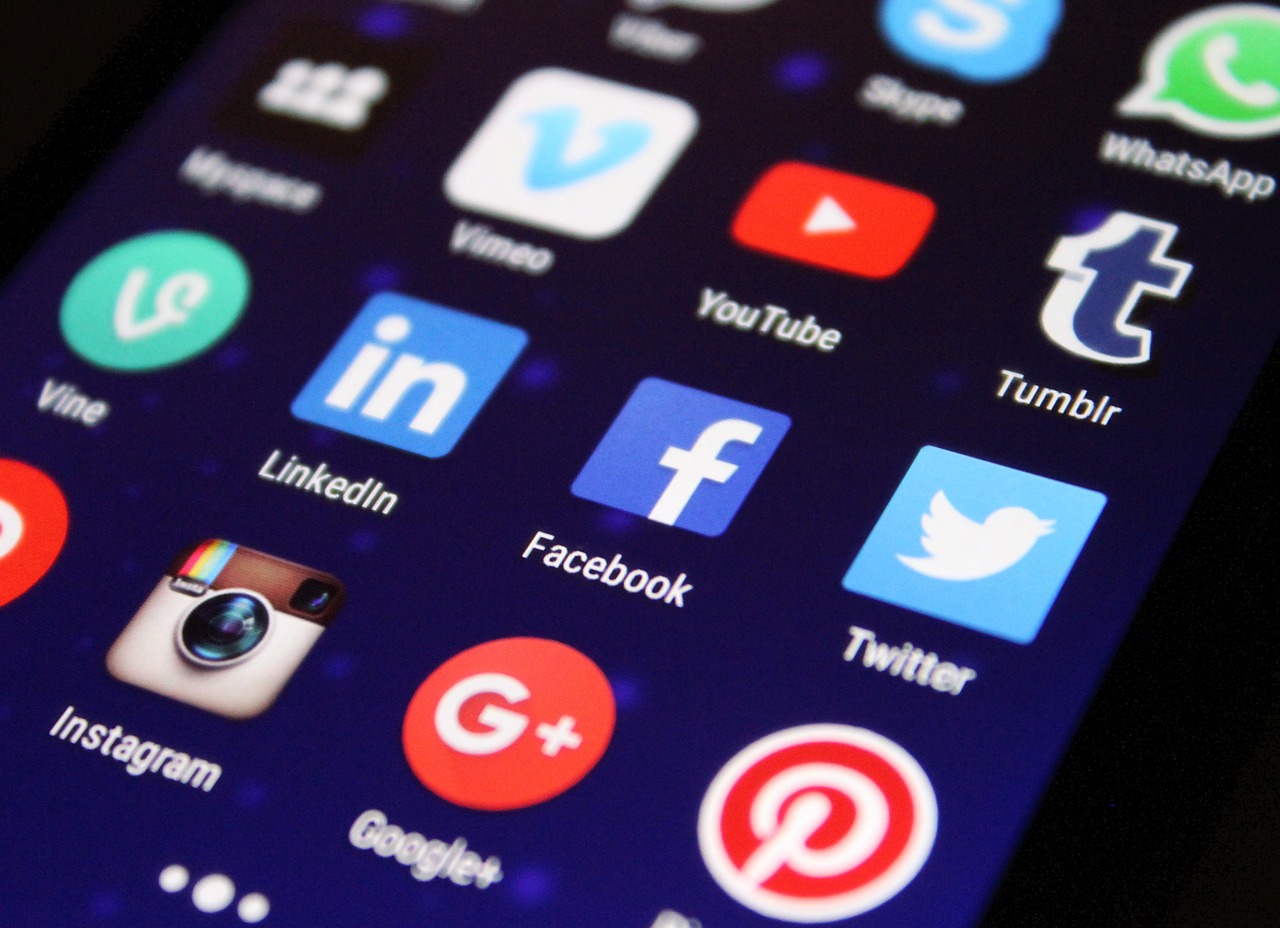
The integrated share functions of social media is the key. YouTube videos can be shared on Facebook, Twitter and other platforms by icons just below the video. Users can share it on their accounts (or a friend’s with Facebook) with unique commentary. Hashtags (Twitter) and sharing (Facebook) are tools to share it narrowly, precisely and in a targeted way. They can “super charge” the spread.

And this wildfire put MMC Land Management in the unenviable position of dealing with a reputational crisis during the holiday season, and it’s likely they learned of it grew on social media.

What is to be learned from this?

There is no holiday season with social media for employers and employees.

A post does not have to be on a highly-followed account to go viral. Time was an article would gain far greater exposure is it was on a national daily rather than a community newspaper.

Not anymore. Multi-platform sharing, targeted tools and ubiquitous smartphones gives all accounts an equal footing. It’s more about the content and less about the platform’s standing.

This is the anatomy of how an interaction in the south-east corner of Pennsylvania speedily gained notoriety and how one employer caught the attention of millions of people who otherwise had never heard of them—all within 48 hours.

Piron v Dominion Masonry

This 2012 decision of B.C.’s Supreme Court, and upheld in 2013 by the Court of Appeal, shows the practical consequences of how the courts view a contract of employment and its changes.

The case is a constructive dismissal case in favor of the former employee. He was dismissed in mid-2011 when the employer refused to pay his bonus—which they had been paying as part of his salary—in 2011.

The employer said the bonus was completely discretionary that was based on the economic health of the company, while the employee said it was payment for every new project. The court agreed with the employee.

The treatment of the bonus is an illustrative view of how an employment contract forms and changes. Because it was not included in any written contract, the courts looked at the discussions and justifications for the bonus to determine whether it was strictly discretionary.

Assessing a contract looks at the customs, practices and intent of the payments. The evidence showed the payments were not strictly discretionary but payment for each project, with the amount to be negotiated. It was not the bonus that was negotiable; it’s the amount.

This decision seems rather unpalatable for an employer. It lacks the clarity and precision of a written contract and is subject to the nuances and details of conversations by managers and supervisors, taking it out of hands of Human Resources and executives. Multiple layers increases the risk of miscommunication or blocked information flow, and this was shown in this case, when one of the owners claimed to have not known about the negotiations for the bonus until close to the dismissal.

Explicitly describing the details of bonus payments in a written contract appears to be the remedy. It is certain and concrete.

But this can be changed by actions and customs that are different. Consistent practices that are different from the contract can be ruled as accepted changes to the written agreement—implied terms— and become part of it.

It’s not enough to have it in the contract. Vigilance and consistency is also key. Actions and policies should match the letter and spirit of what is written.

Social Media

Social media has carved its own space in the internet revolution, which has ushered in the age of communication. Social media has enhanced this with Facebook at the helm. Facebook’s reach is still growing and changing, and its effects are constantly mutating with profound consequences for the business world.

Facebook launched as an alternative to MySpace, then the dominant social media site. Its platform and system’s popularity exploded into the behemoth it is today. It is also adept and shrewd at adapting by constantly tweaking their platform, adding features—instant messaging, for one—and “updating” their privacy settings.

Facebook’s meteoric rise has been fast and the law has so far been unable to keep pace. Sources of laws such cases and legislation can take years to form and during that time issues related to Facebook rise and change multiple times. Facebook’s speed has profound consequences for Employment Law.

Facebook is straining some of the tensions in an employment relationship. One is the efficient use of company time. Facebook is becoming a daily, almost hourly, routine for many. Norwegian researchers have even developed a scale for Facebook addiction. This is coinciding with the rise of mobile computers; the smartphones. It makes Facebook is available at ease; at the push of an app icon. It is much easier to use Facebook on company time. Another layer is an employer’s policies on smartphone use at the work site and whether employees compensate by using Facebook on their work computers.

We are now reaching the point of smartphone market-penetration maturation in North America; the explosive growth in annual smartphone sales are leveling, which means that most who can afford a smartphone have one. This also means the smartphone is ubiquitous. Talent acquisition and retention strategies increasingly have social media use as a key plank. But tensions lie in the limits on using Facebook at and for work, and having employees switch from their regular use to a workplace one. It’s fine to spend an hour perusing your friend’s feeds and commenting at home, but perhaps not so while working. Employers now have to craft policies that lure and retain top talents while maintaining efficiency and professionalism.

Employers are increasingly embracing the growing role of Facebook and social media in the workplace, whose use span multiple areas. But integrating Facebook is just the start. Its volatile nature; the slow response by the law, and the sometimes devastating consequences of Facebook posts mean that employers must do more than anticipate where the law is headed with Facebook and social media—they have to devise forward-looking playbooks with philosophies, strategies and policies that can balance the fast and curving highway that is Facebook with the upcoming legal changes and the company’s goals.